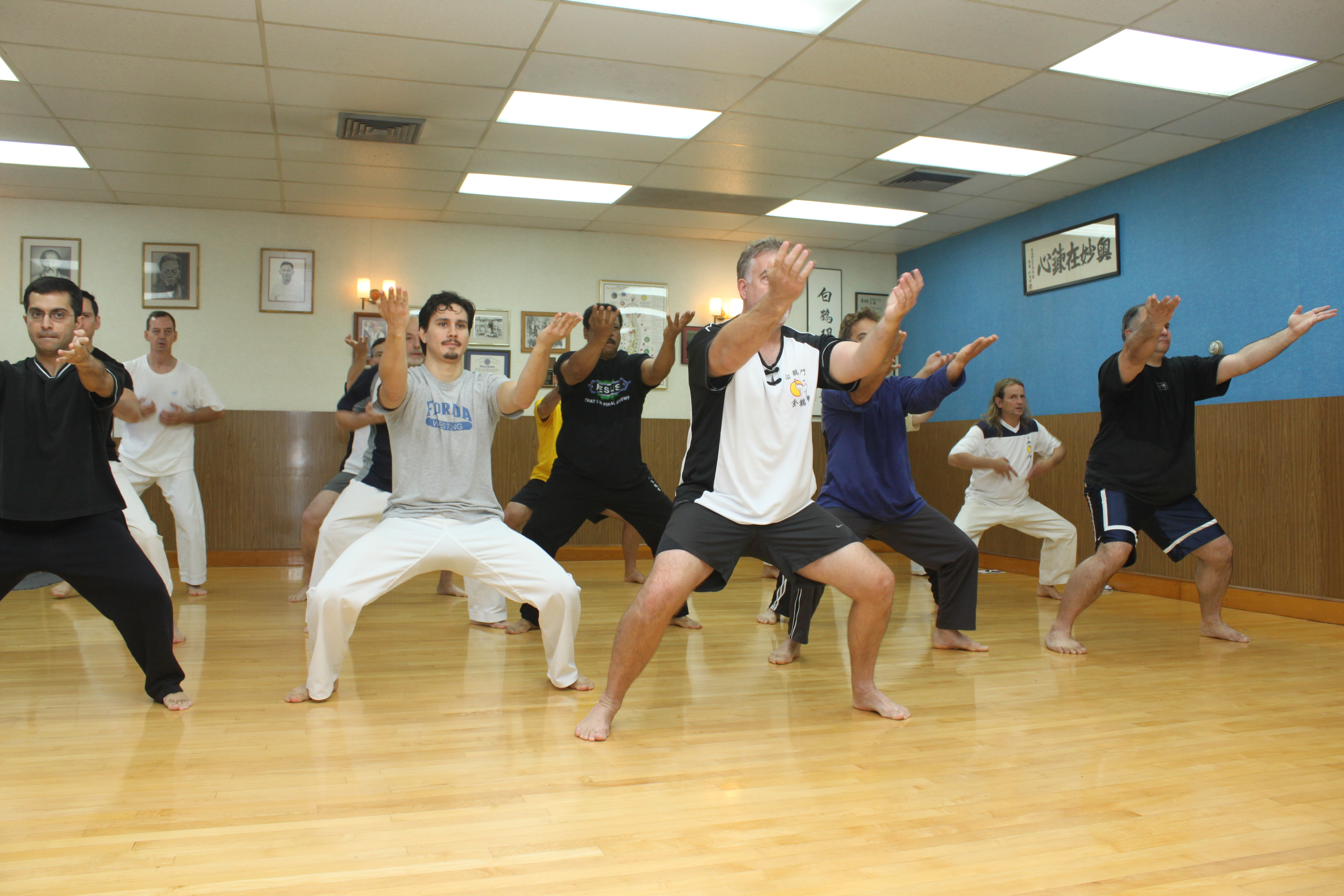
Legend says White Crane kung-fu was originally developed by Fang Qiniang. Fang was taught Sholin by her father and after trying and failing to drive away a crane with her pole she was inspired to develop the White Crane style. Her system eventually developed various different iterations- Flying Crane, Sleeping Crane, Calling Crane, and Feeding Crane among them. Originally from Fujian province, Feeding Crane was brought to Taiwan in 1927 by Lin De-Sun. Lin sifu was asked by Liu Gu to teach him, and in return Liu Gu set Lin sifu up with a house and servants as part of his tuition. Lin sifu was killed by the Japanese occupational government in the late 1930s and Liu Gu became the successor of the Feeding Crane system. He passed this on to his son, Liu Guo, and Liu Guo to his son, the current inheritor of the system, Liu Chang’I.
Since its development in Taiwan Feeding Crane has died out in mainland China (though Liu sifu’s uncle has taught in Fuchow at the invitation of the Fuchow martial arts association, and Liu Chang’I has started teaching students there as well). In Taiwan the Liu family Feeding Crane is known for the power of its techniques, power that is demonstrated in part by the “thunder” of practitioners’ bodies- the deep thumping sound the system’s fajing (sudden release of power) creates in the body as techniques are done.
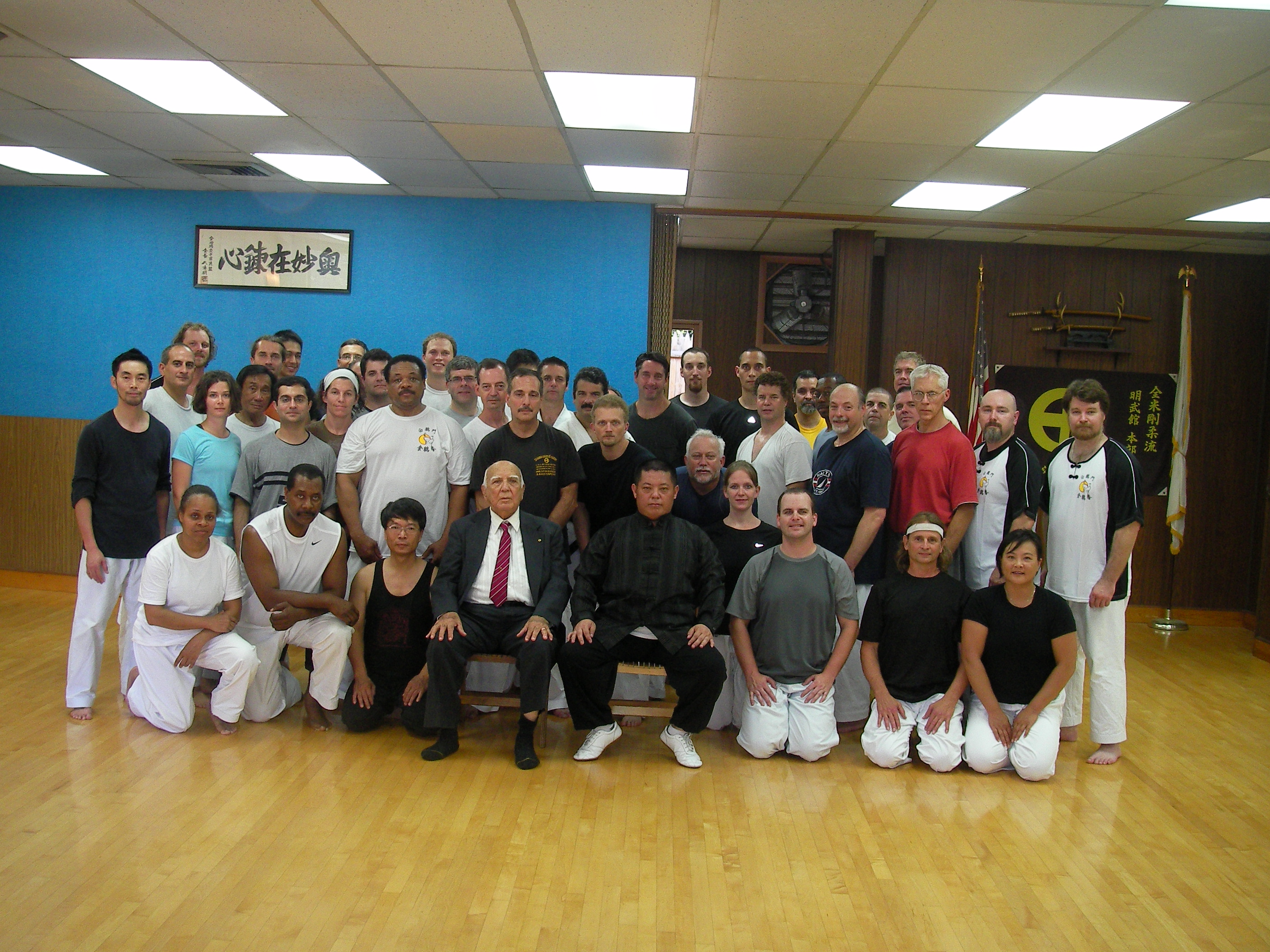
Feeding Crane seminar, Watertown, 2010
The current inheritor, Liu Chang’I sifu, comes to the US periodically to teach his system, spending a week or two in the Boston area every visit. He was originally brought to the US by Kimo Wall sensei, in 1996. Members of the Kodokan Boston dojo trained with him on that visit, but really began training regularly with him in 2006. Fred sifu also occasionally teaches seminars on Feeding Crane here in the northeast, and has occasionally taught around the US and in Canada.
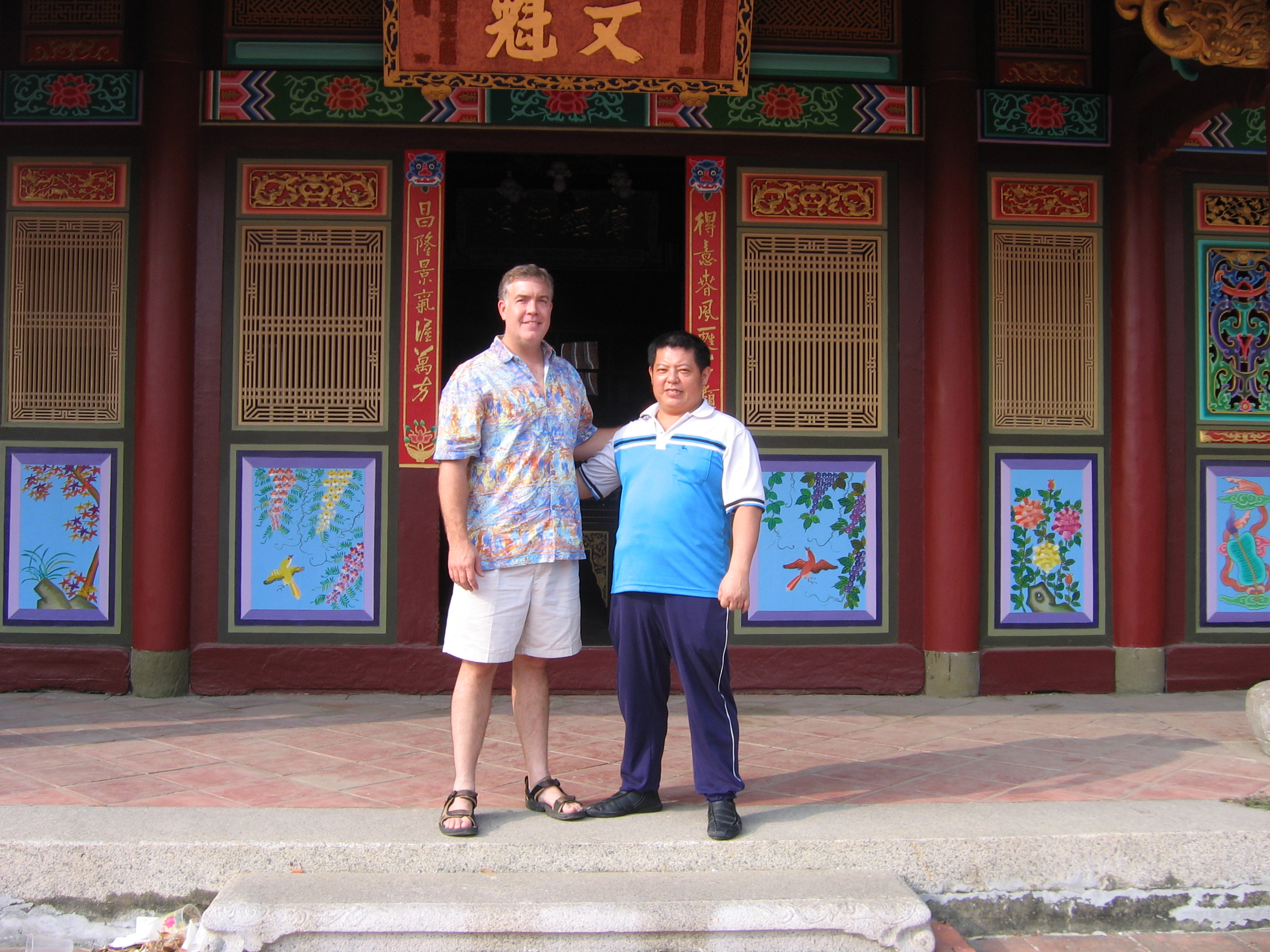
Fred & Liu sifu, Taiwan, 2009
The core of the Feeding Crane system is the ji bei gong, the power development techniques that inculcate the sudden, short range power of the system. Some of the basic movements reference elements of Chinese cosmology- the 5 element hands (Fire, Water, Earth, Wood, and Metal) feature prominently.
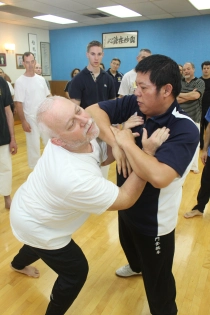
While there is gradual instruction in the basic movements, there are no ranks in Feeding Crane. You know what you can show. Each student learns at their own pace, and we all train together. In addition to the basic movements there are specific practices for developing sensitivity to the opponent’s movements and attacks- some are similar to tai’chi’s push hands. There are practices for developing an “iron shirt”- conditioning the body against impact, learning to move and step, develop hand and body speed, and develop good combative reactions, among other things.
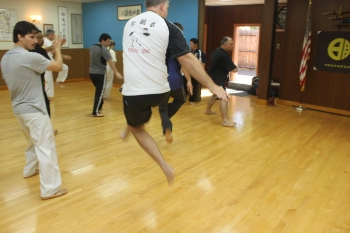
The system’s forms are taught as the student gets deeper into the system but the focus remains on the ji bei gong and two person work. The application practices are rooted in both the basic movements and the forms. They demonstrate clearly the non-sportive focus of the system. The “defender” does not always wait to respond to an attack and counters focus on striking vital areas of the attacker, using the short power and rapid-fire attacks that are the hallmarks of the system.
 Kodokan Boston