Dojo Kata

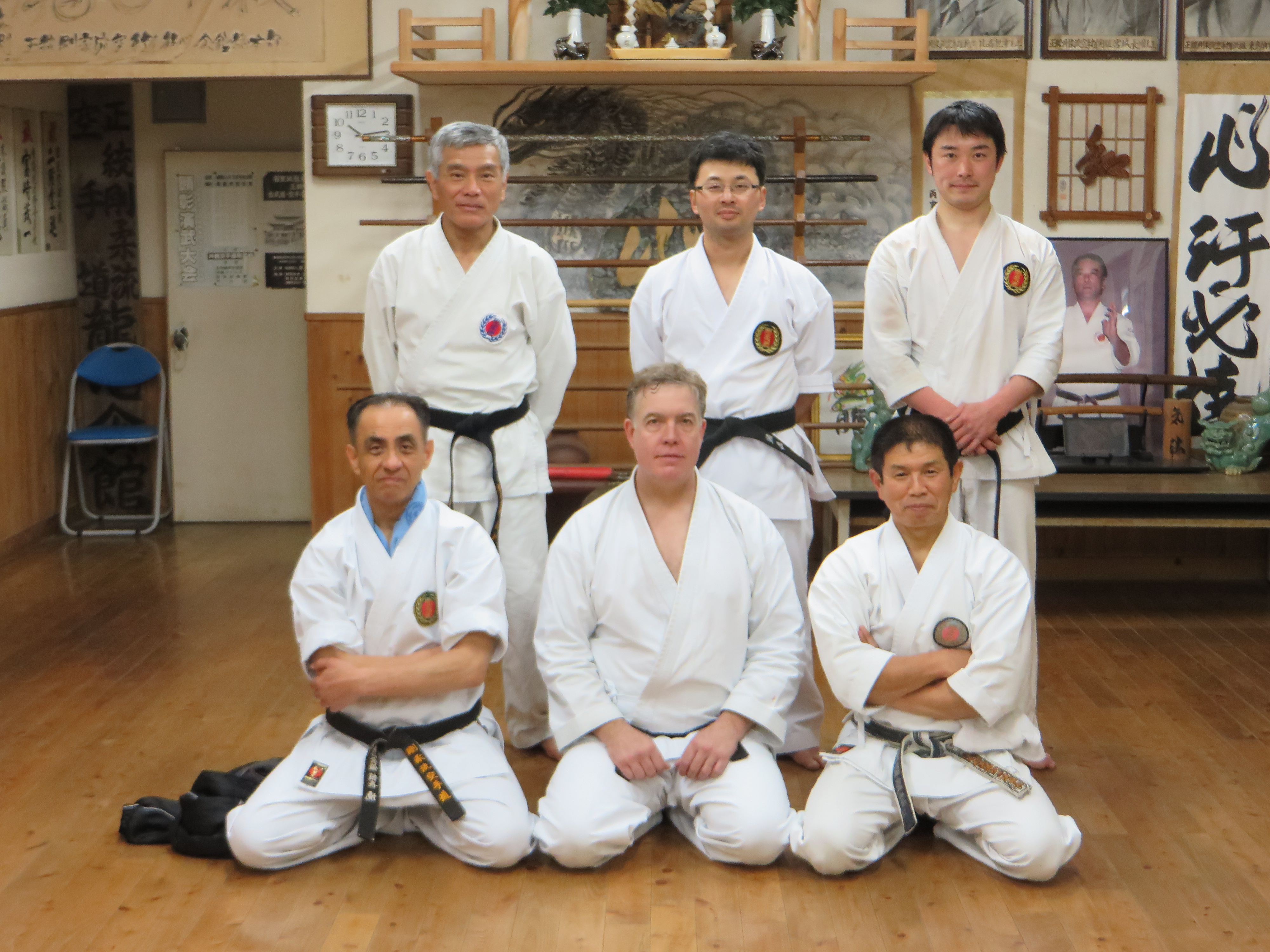
You never know who you will bump into in Shureido. Nakasone san has been at the hub of the Okinawan martial arts community since the 1960s, and at one time or another every karate and kobudo teacher on the island comes through his shop. This time, while I was sitting having coffee with Nakasone san in came Ishiki Hidetada. Ishiki sensei is one of the senior students of Matayoshi Shinpo. I trained with him in the Kodokan in 90’s but had not seen him since Matayoshi sensei passed away. He is a very nice man, and an excellent kobudo (and karate) ka. After a few minutes of talking he remembered me, and he invited me out to his dojo the next day.

Training was great fun! Ishiki sensei not only does karate and kobudo, but he is also a teacher of Okinawan folk dance and Eisa and his kobudo group does a lot of demonstrations. An example of one of his shows is here: https://www.youtube.com/watch?v=LV7brXwhuZg  What I particularly liked about training with him was that he has taken complete charge of his dojo, and his training. He has created a “warm up kata” that takes a few minutes to do and includes elements of Shorin, Goju, and Matayoshi tode kata, among other things. It is very mobile, and he sometimes does it to music. Trying to follow him through it left me impressed at his speed and agility, as well as general fitness level- he is in his 60s but moves like a much younger man!

We did some warm ups, including walking through Matayoshi lineage tode forms and his warm up kata, and worked for a while with the sansetsukon. Then we spent some time with the version of Tokumine no kon he does. It is a dojo kata, and I was impressed with both its content and the comfortable way Ishiki sensei has with teaching it. I was only visiting his dojo, and only there two nights, but he made sure we had as much time with it as we wanted. “I want to share it”, he said, “so let’s make sure you have it!”

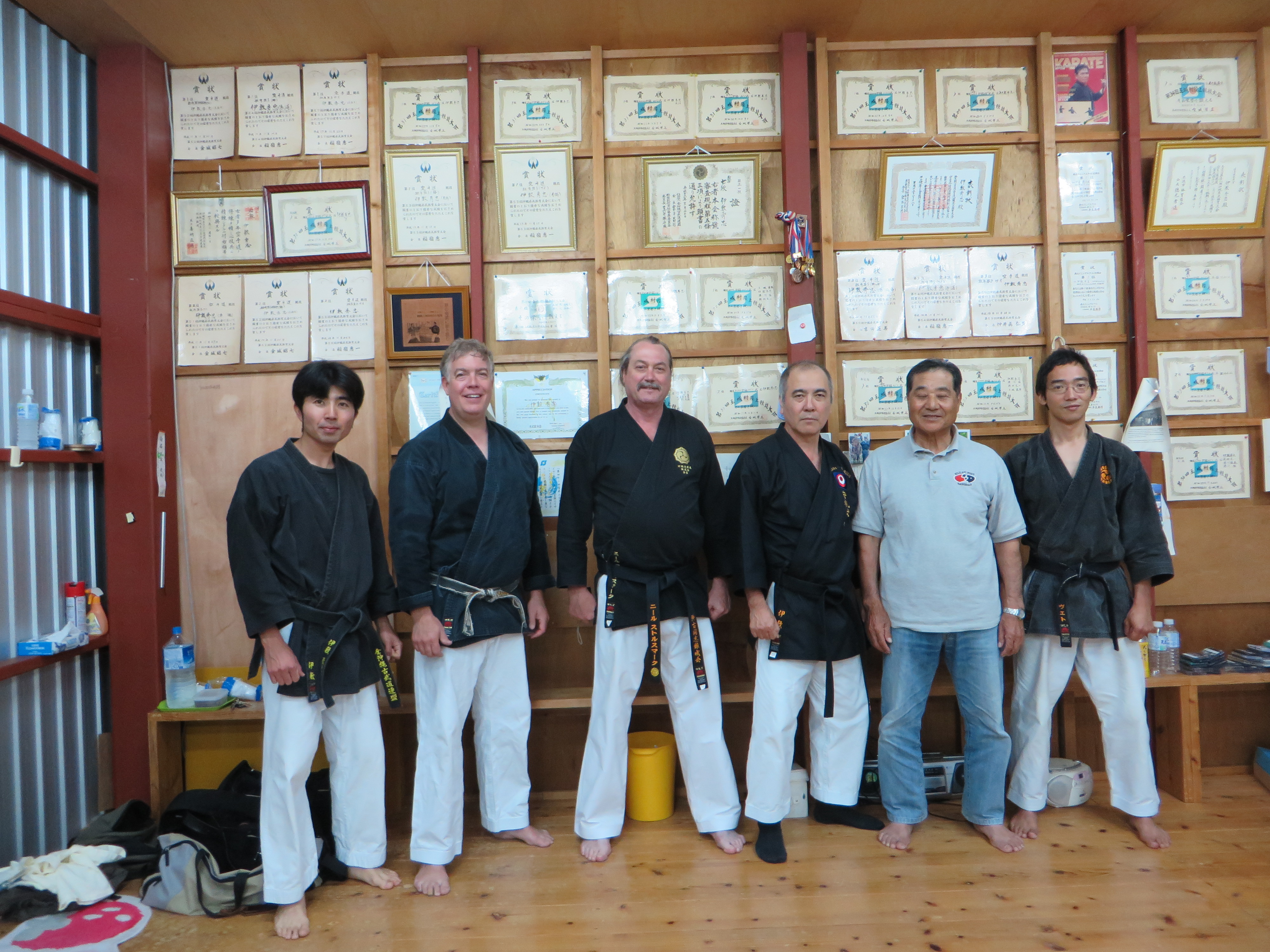
In Ishiki Hidetada sensei's dojo. Ishiki san, Fred Lohse, Neil Stolsmark sensei, Ishiki sensei, Yakashiro Kenichi sensei, Beruto san (spelled incorrectly- sorry!)

In Ishiki Hidetada sensei’s dojo. Ishiki san, Fred Lohse, Neil Stolsmark sensei, Ishiki sensei, Yamashiro Kenichi sensei, Viet san

Tokumine no kon is not one of the base Matayoshi kata. I have seen in it some kata lists from at least as far back as 1970 and people I know who trained with Matayoshi at the start of the 1960s say that they used to go through 10 or 11 bo kata at times, and it was one. However, along with kata like Ufutun bo and Ufugushiku no Sakugawa no kon, it is not an official kata. The version Ishiki sensei does he calls Tokumine no kon sho. He and Yamashiro Kenichi developed it out of what they now call Tokumine no kon dai, the base Matayoshi version that is very similar to the other Kyan lineage versions around the island. The kata is in that demonstration above, if you are interested in seeing it.

It is quite a bit more elaborate than the standard version, and some people might question its value, as it is not an “old” kata. But that, I think, is where the value of dojo kata lies. They are new. They allow teachers to be creative, to express their own thinking on the system and their practice. They can also simply be fun, something that gets left out of some peoples’ training. Ishiki sensei was not trying to say it was an old form- he immediately introduced it as his own interpretation of the older form. But he teaches it to his students as their first bo kata, and I like that. He is taking responsibility for directing his students in his dojo, and has faith in his knowledge. He has a vision and is working towards it. While dojo kata often fail, in my opinion because the teacher is not actually experienced enough to develop one, when a good teacher puts one together they demonstrate something unique about that person’s experience and shed light on the system as whole. I like the form. I may keep practicing it. And I am really glad I got the chance to see Ishiki sensei again and have the opportunity to see where he has taken his practice. My thanks to him and his students for sharing with us. It was fun, and I was very pleasantly impressed with both the technique and the welcoming atmosphere!

Remembering Old Faces

Just got back from another trip to Japan and Okinawa. It is always great to see friends, train hard, and see some of my teachers. I always learn something, and I always leave hoping I can return soon. Now that is has been more than a few years since I was living and training there though it seems that every visit there are fewer old faces amidst the new folks. People stop training, move away, or pass on. These changes are natural, but visiting every year or so instead of being in the dojo all the time makes them stand out.

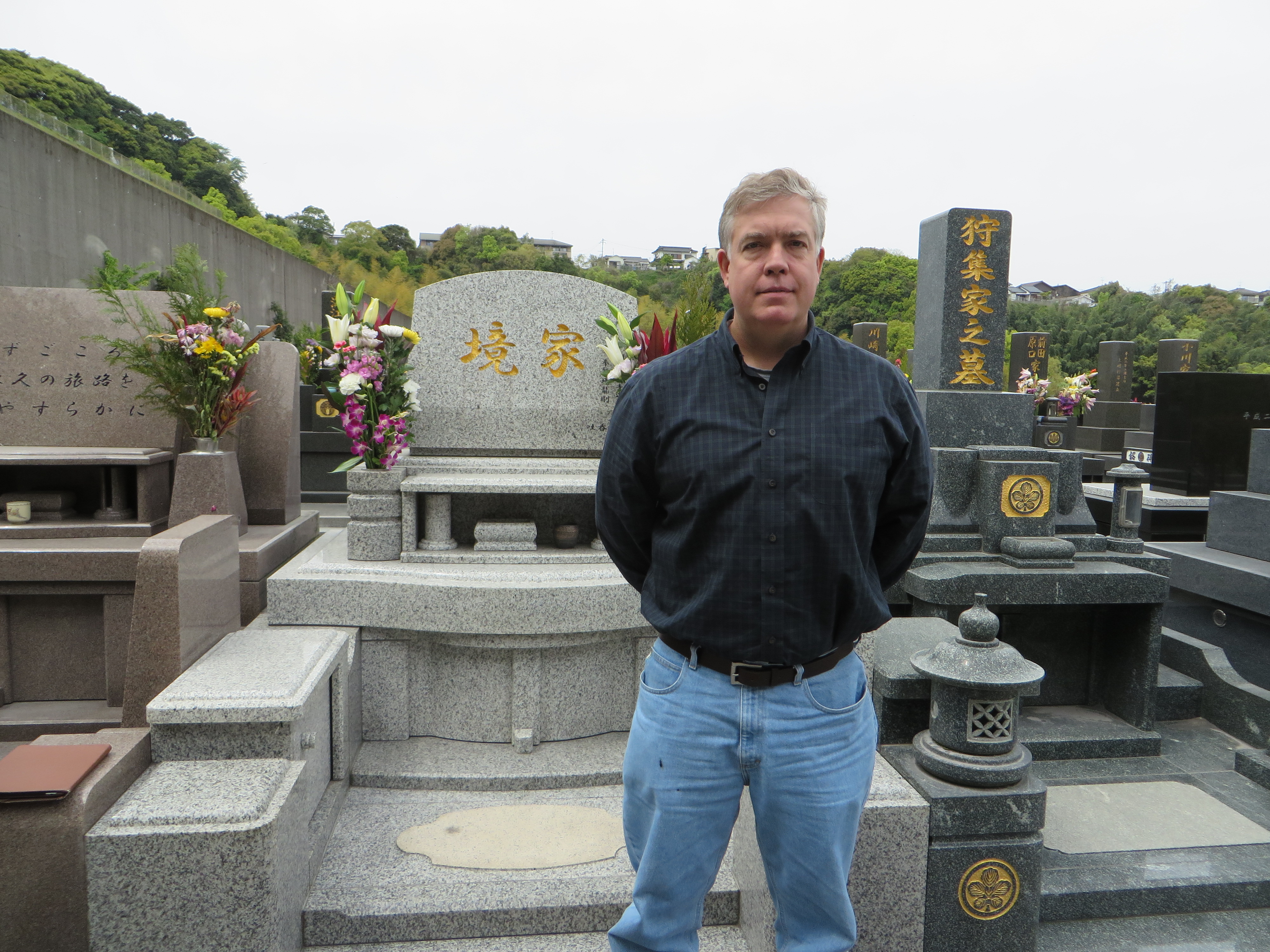
One day early in this trip Miyagi Tatsuhiko sensei took me to the grave of our teacher, Sakai Ryugo. As some of you may know, Miyagi sensei is the shihan dai at the Ryushinkaikan dojo in Kagoshima, Japan. He is one of the most refined and powerful (and fit!) karate-ka I have ever seen, and it is my good fortune to be able to train with and learn from him when I visit. We met for lunch soon after I got to Kagoshima, and he suggested we visit Sakai sensei’s grave. Sakai passed away a few years ago and I had not had the chance to go, so I was glad for the opportunity.

At the Sakai family grave site.

At the Sakai family grave site.

We got some flowers, went to the family gravesite, cleaned it, set the flowers, and paid our respects. I was a little surprised at how much the simple visit affected me. I started training in the Ryushinkaikan in the early 90’s. I found the dojo essentially by chance- I was visiting Okinawa soon after moving to Japan and asked Mr. Nakasone at Shureido about dojo in Kagoshima. He gave me Sakai sensei’s address. They did not advertise, so I may never have found the dojo otherwise. (There was no internet in those days…)

At that time I had been training Goju Ryu and Matayoshi lineage kobudo for nearly 5 years. I had been training in a university dojo where a 4+ year yudansha was a senior student. It was the only dojo I had known and based on my experience I thought I understood this karate thing pretty well. On my first visit to the Ryushinkaikan I got a lot of compliments about my technique and my knowledge. Honestly, that felt natural to me. I was a senior, right? My training to that date had been of the highest quality. I knew what I knew, and it was good Goju Ryu. It was even a nearly identical lineage- Higa Seiko Goju Ryu, with influence from Toguchi Seikichi. But it’s what you don’t even know you don’t know…..

It turned out that there is a lot of difference between a 5 year yudansha in his early 20s and members of an adult dojo where the senior students have 20 or 30 years hard training under a good teacher. I had not known that. I should have been able to figure it out. I had been told it pretty directly, but I hadn’t really understood. Let’s just say I got shown the error of my ways.

For me, this was perfect timing. I think I needed a little ego knocked out of me. I certainly got that. But the lucky bit was that I got it in a respectful and sharing environment. I have visited other dojo that could have beat me down in those days. Luckily for me I happened into one that had an excellent teacher of a similar lineage who saw his role as one of guide and coach. So yes, I got a regular beating. But I also got careful instruction, attention to my technique and how it worked with my body, and occasional questions about how I was instructed before I got there. Instead of being dismissive, while making it clear he felt I had a lot to learn Sakai sensei also took pains to give me credit for what I had done. He welcomed me into the dojo, insisted the other members treat me as a training partner not a guest, and shared his karate and kobudo with me. So did everyone else, from the seniors and teachers on down. They wanted to share and wanted to see each other succeed. And they treated each other like adults, demanding personal responsibility for both one’s training and one’s behavior.

I hope I have taken those lessons with me. When I was standing by Sakai sensei’s gravestone  all sorts of memories came flooding in- training, parties, conversations. I was only there for a couple of years, but the experience changed how I approach my practice. I made lifetime friends and gained a valuable window on both our Goju Ryu and on a successful dojo. I have Sakai sensei to thank for that, and I wish I could do so.

It came time to go, and I walked away from the grave with wet eyes. Later in the day Miyagi sensei and I went to the dojo. We did some “light training” – hojo undo, kigu undo, and so on- before regular training started. Sakai Ryuichiro sensei, Sakai sensei’s son, now runs the dojo and he joined us as other students came in. There were a couple of other old friends from the early 90’s and a few people I did not know. We greeted each other and started training. We sweat, and tossed each other around. Miyagi sensei and Sakai sensei corrected elements of my technique, and asked me to share some of what we do here with the rest of the dojo. As usual, it was great training.

Rushikaikan Bottom Row: Sakai Ryuichiro, Fred Lohse, Miyagi Tatsuhiko

Rushikaikan
Bottom Row: Sakai Ryuichiro, Fred Lohse, Miyagi Tatsuhiko

When we finished and were having some tea and talking I was thinking again about the visit to the grave earlier in the day. I realized we had just done exactly what I think Sakai sensei would have wanted- continued to grow in our karate and to work together doing it. I hope that is thanks enough.

Feeding Crane Seminar, June 2014

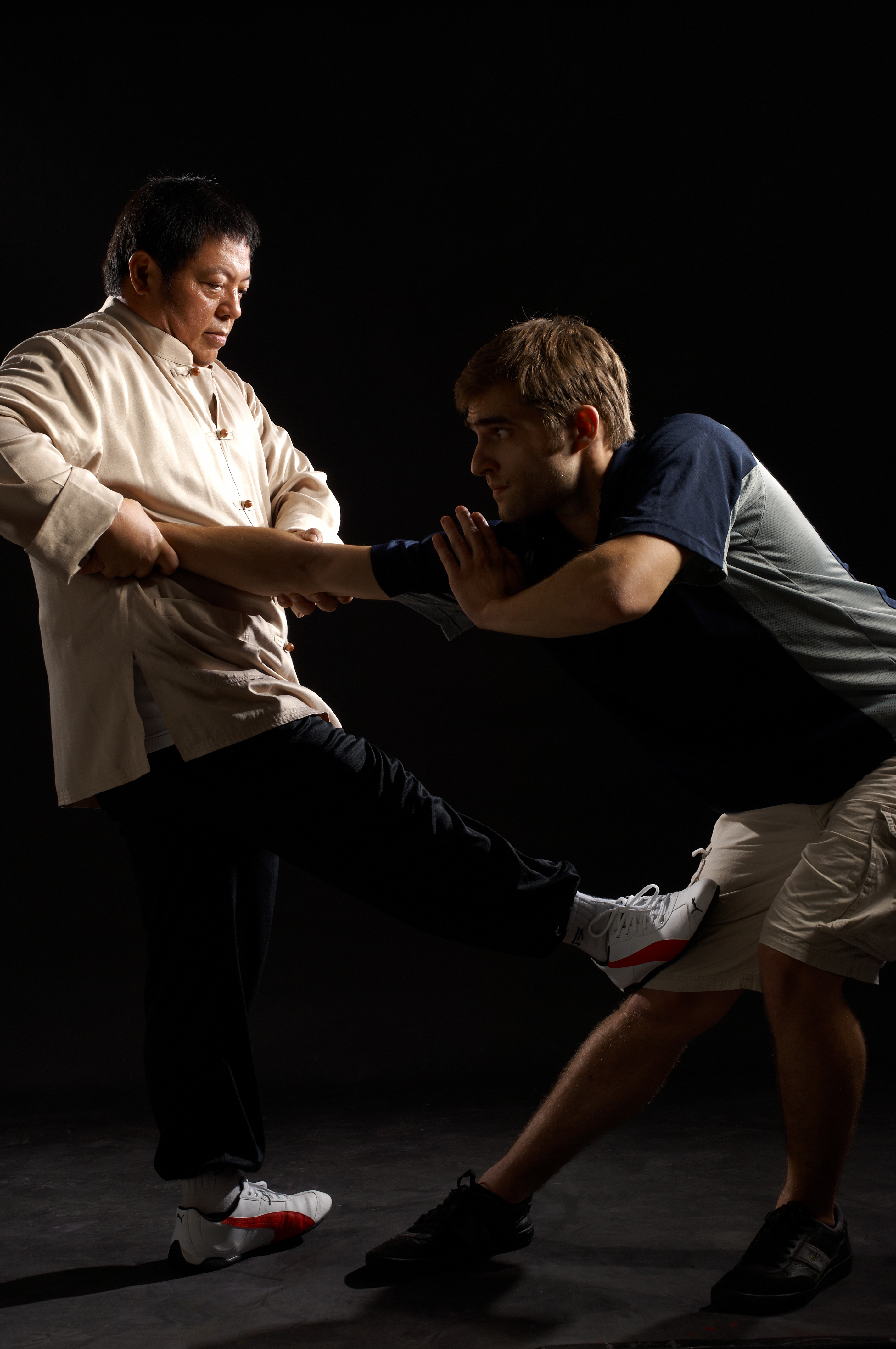
Sifu Liu Chang’I will be in Boston twice this year. The first time will be in June. We’ll be having a seminar on his family’s Feeding Crane Gong’fu June 21st and 22nd, Saturday and Sunday. It will, as always, be a great time! There is more information on the Events page of our site, and the sign up and information sheet is here. Please contact us if you would like any more information. We are looking forward to a fun weekend and hope to see you there!

_LE20527

Too Many Black Belts?

So I had a conversation a little while ago about rank. Someone was saying to me that they felt a certain dojo had too many black belts. The implication was that standards were low. I am not going to speak to standards here: the last thing the anyone needs is yet another rant about McDojos and what they are doing to the martial arts. However, the idea of a dojo having too many black belts stuck with me. If you have been training for a while you have probably noticed that not that many people stick it out. For arts that use that ranking system, just before or just after black belt is one time where you see a lot of attrition. So given the turnover, and that it often happens right around black belt, it seems obvious that a dojo with a lot of black belts is giving them out too easily. Otherwise they would be rare, since people that stick it out are rare.

But that is bad math. Bad statistics, really. How many people stick it out in general does not matter. You are not looking at the entire population of people who have ever trained, but at who is currently training in a given dojo. If a dojo is a good one, and by this I mean one where there is a solid knowledge base, good teaching methods, high standards, and a collaborative atmosphere, there should be a high percentage of black belts. If the knowledge base and atmosphere are good people will stay. Not all. Maybe not even many. But some will stay. And unless the teaching is bad they will learn. And since 1st degree black belt is a relatively junior rank, they should eventually become black belts.

People that stay learn, and are (eventually) black belts. People that leave leave, and are therefore not counted when looking at who is currently training. So at any given time only the newer members will not be black belts. The statistics are simple: in a well established dojo with high standards you should see a large proportion of black belts. If not, it means either no one is staying, or no one is learning. And that would not be a good dojo.


Kodokan Boston in the Blogosphere

Hello,

as you may have gathered by the last post, the new Kodokan Boston website is more than a dojo site. While we will certainly be using our blog for news and information for dojo members and announcements of upcoming dojo events (like our open training) the blog will also be a forum for some examination of the arts we practice and how we practice them, additional information on these arts, and hopefully the thoughts of various members of the Kodokan Boston community. We hope that people find these posts interesting! Please enjoy, and welcome to the Kodokan Boston blog.

cheers,

Fred

Master on the Mountain

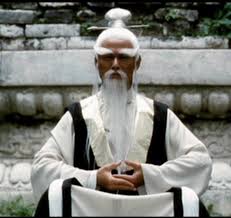
Pai Mei

Everyone knows this image: the old master of the martial arts living alone on a remote mountain top, students coming to him for wisdom and training. His mastery comes from arduous training and an enlightenment that springs in part from his solitude. It is an image that plays perfectly into our “self made man” ideal, and I see it reflected in martial artists who claim they “just train alone”. A nice image, but in my opinion it is nonsense.

This stereotype does spring from something. Training is a profoundly lonely task at times. Endless repetitions, hours spent developing strength, stamina, and mechanics, and knowing that while your teacher can guide you, you are responsible for your progress. No one else but you. That is lonely. Nevertheless, for most of us, and certainly for any real martial training, our practice is actually a profoundly social act.

Day after day, year after year, we come down to the dojo and train. Sure we also train alone, but we train with others. We are members of a dojo, or a club, or simply a group of people who share a common interest. We come together to learn, to sweat. We share our weaknesses, our failures, and our successes. We rely on each other for support, assistance, criticism. A group that is really pushing you will see you fail. They will see parts of yourself you like to keep hidden- fear, lack of faith in yourself, laziness. They will also see you succeed and develop. You have to trust them with your safety, and with your emotions. You have to be trustworthy the same way. I don’t know about you, but to me that is pretty personal.

And it cannot happen alone. To push your boundaries in the martial arts you need people to work with. In primarily solo activities- strength training, forms, flexibility, etc.- partners help you push past barriers, show you where you are making mistakes. But while you may be able to develop strength, form, or flexibility alone, you will never learn how to apply them without partners.

Real martial arts are interactive because violence is a form of social interaction. In learning to deal with it you need to feel other bodies, deal with different weights, sizes, ways of moving and ways of thinking. You need to respond to attacks and learn how to manipulate an opponent, physically and psychologically. An imaginary attack is just that- it has no intent, no feeling, no heft. Without partners, the arts are a hollow shell, like learning a foreign language without ever speaking to anyone: how do you know if you can communicate? So training is, has to be, social.

And that is a good thing. While the ideal seems cool- being a master sitting on a mountain alone- who really wants it? I don’t. I would prefer a group of friends around me. We share sweat, pain, failure, and sometimes blood. We share laughter, achievement, and the pure joy of training. And more. We have dojo parties, go out for an occasional drink, know each others’ families, share milestones like weddings and birthdays. If I am going to spend this much time at something, I want that something to have depth, value. If I am going to show that much of myself to a group of people, I want them to be people I trust and respect. People I like. They are my community, my martial brothers and sisters.

So when I hear about great masters or experts in the arts, I tend to wonder: who are their training partners? Who helped them get that good? Who do they continue to train with? Who questions and critiques them? Who are their friends? For me, who their friends are will show me more about them than their technique. If they have no friends, no training partners, and are sitting alone on a mountain, then I know all I need to.
Open Training!

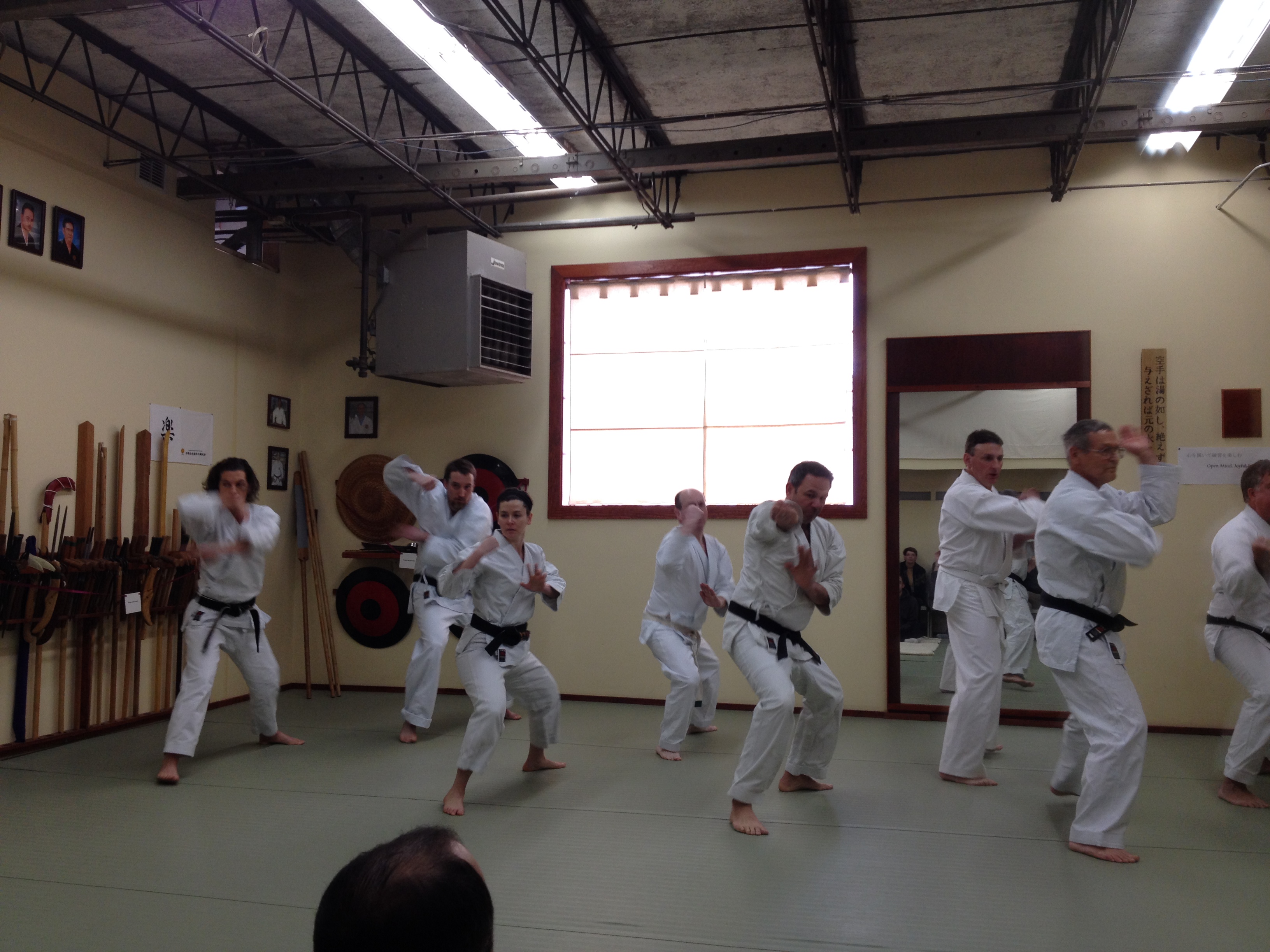
Thank you to everyone who came out for our demo and open training. It was a fun afternoon! Everyone in the dojo did an excellent job, and it was great fun share some of our practice with friends and family, and to see folks trying a few things- chishi, hitting the bag, and pushing each other around in kakie! It seemed like everyone enjoyed it, and we had a great time.

2014-03-08 15.01.11

Group demoing saifa

As always, we appreciate the support and friendship of the community around the dojo, it is one reason we can keep doing this.

Open Training

Kodokan Boston is doing an open training tomorrow, at our dojo in Waltham. Come down, see some of what we do, and learn more about our dojo. Should be a fun afternoon! See the Events section for more information.