I’m not a historian. I find however that understanding history is essential to understanding a whole host of other things. In my academic training history was considered a key part of the background needed to understand current social and cultural circumstances. Without this background it is very easy to make simple mistakes, or to fall victim to overly simplified or just plain false but popular narratives about all sorts of things. The “weapon bans” are a good example, as while there were laws governing ownership and storage of weapons promogulated by Sho Shin in the 1470s and again later by the Satsuma after the 1609 invasion, neither of these resulted in the noble classes being prohibited from owning or carrying cut and thrust weapons. Not understanding that there were weapons on Okinawa, and that there were no peasant uprisings, makes it easier to create all sorts of narratives about the development of the Okinawan martial traditions that are, essentially, good stories but not rooted in fact. To me that means we’ve lost the opportunity to understand what really happened, and are instead being governed by a narrative that pushes a certain specific view of how these arts came to be and, therefore, what they might mean.
Anyway, that’s just an example. Another commonly held belief that permeates Okinawan culture is the idea of a “chanpuru” culture, a “stir fry” culture made up of a variety of different ingredients- Japan, China, South East Asia, more recently American, etc. It is true that there are various influences on Okinawan culture, Chinese of course, and even more prominently Japanese, and the Okinawans are rightly proud of their culture’s ability to adapt, absorb, and make their own influences from a variety of sources. However, one thing that I think often gets overlooked in this perspective on Okinawan culture is the influence of Okinawa on the cultures around it. This “chanpuru culture” can be seen as a pretty one-way power structure. It implies that the main agency the Okinawans have is reactive. That the outside influences are more powerful and the only real choice Okinawa has is to absorb and adapt to them as they don’t have the power to generate their own cultural capital or any ability to resist, or affect, outside hegemony.
I don’t buy it. While the political elements of this general narrative are fairly accurate, they fall down in a number of ways when examined more closely. Yes both China and Japan (and later America) have been more militarily and economically powerful throughout Okinawa’s history. However this ignores the role Okinawa played in, for example, the international arms trade through the 14-1600s or it’s role as an intermediary for China and Japan in trade between each other and to South East Asia. More importantly, it fails to recognize the influence of Okinawa on the culture of mainland Japan.
Obviously the scope of this influence is far more than I can approach in a short non-academic blog post. Some things jump out of course, like the introduction of the sweet potato into Japan, through Satsuma. Indeed, though it was brought to Okinawa from Fujian by Noguni Sokon and later exported to Satsuma, across Japan it became known as the Satsuma Imo, Satsuma potato, not the Okinawa or Ryukyu potato. But there was a lot more, both native Okinawan elements and Chinese cultural elements adapted and transmitted through Okinawa to Japan. On our recent trip a few of those stood out to me. Nothing particularly surprising, or in the slightest unknown to scholars or indeed popular history, but as we traveled to places I was familiar with I was struck by how paying attention in a different way brought my attention to things I may have known but not really thought about very much before.
The influence of Satsuma, present day Kagoshima, on Okinawa is incontrovertible. After the 1609 invasion the Shimazu ruled the Ryukyu islands, turning Amami into essentially a sugar cane producing plantation and using Okinawa’s connections to the East and South East Asia trade routes to enrich themselves. But while this was happening Ryukyu also wound up exerting a level of influence on Satsuma, and through it on the rest of Japan. While, as I said, any holistic look at these influences is beyond this brief piece, here are a few examples that stood out, really just from looking at tourist information.
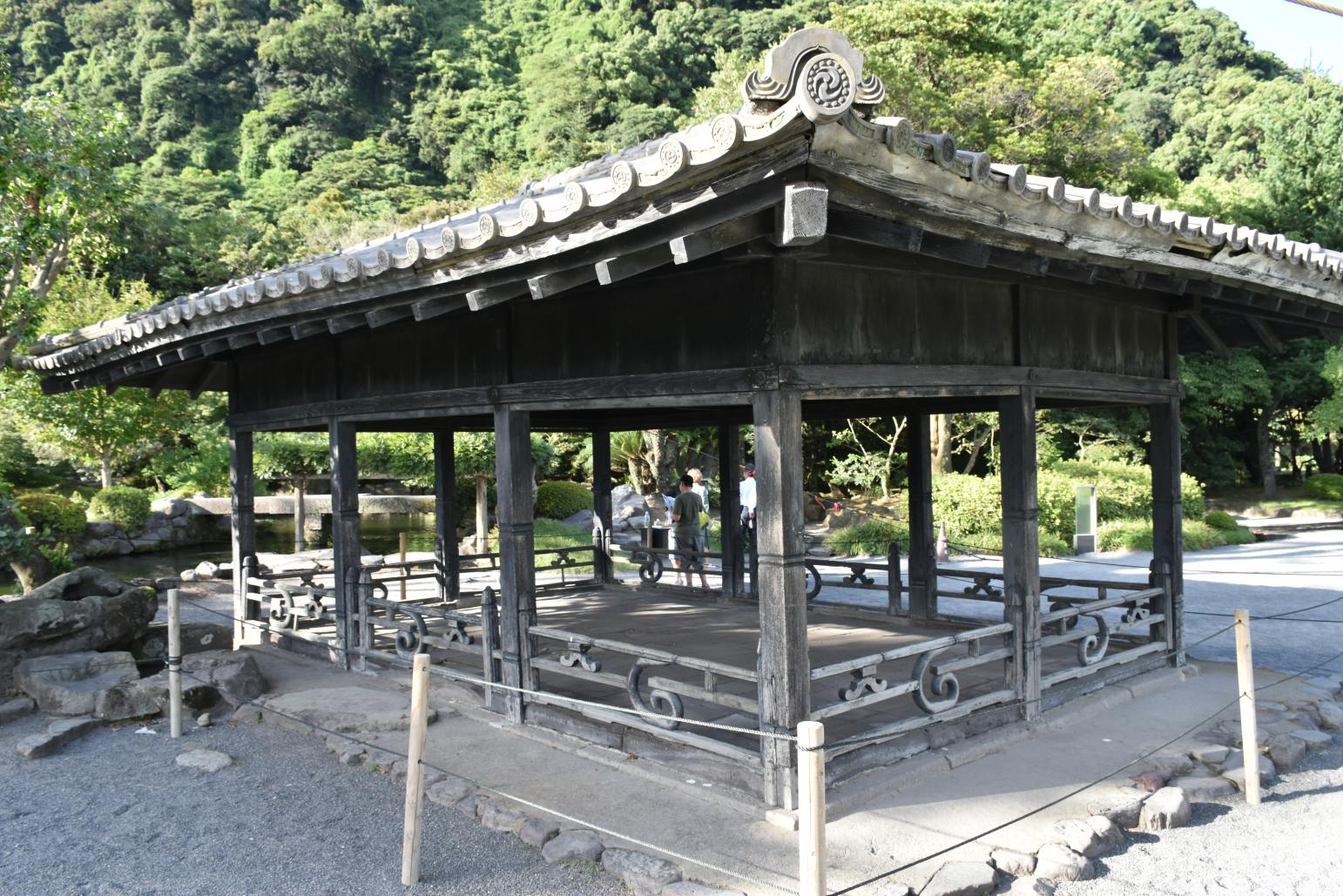
In Sengan-en, the historic site of the Shimazu clan mansion in Kagoshima city, there is the Bogakuro pavilion, a gift from king Sho Tei of the Ryukyu kingdom, that was a major part of the grounds and used to welcome visiting dignitaries and entertain guests. Ties to Ryukyu were considered important by the Shimazu.
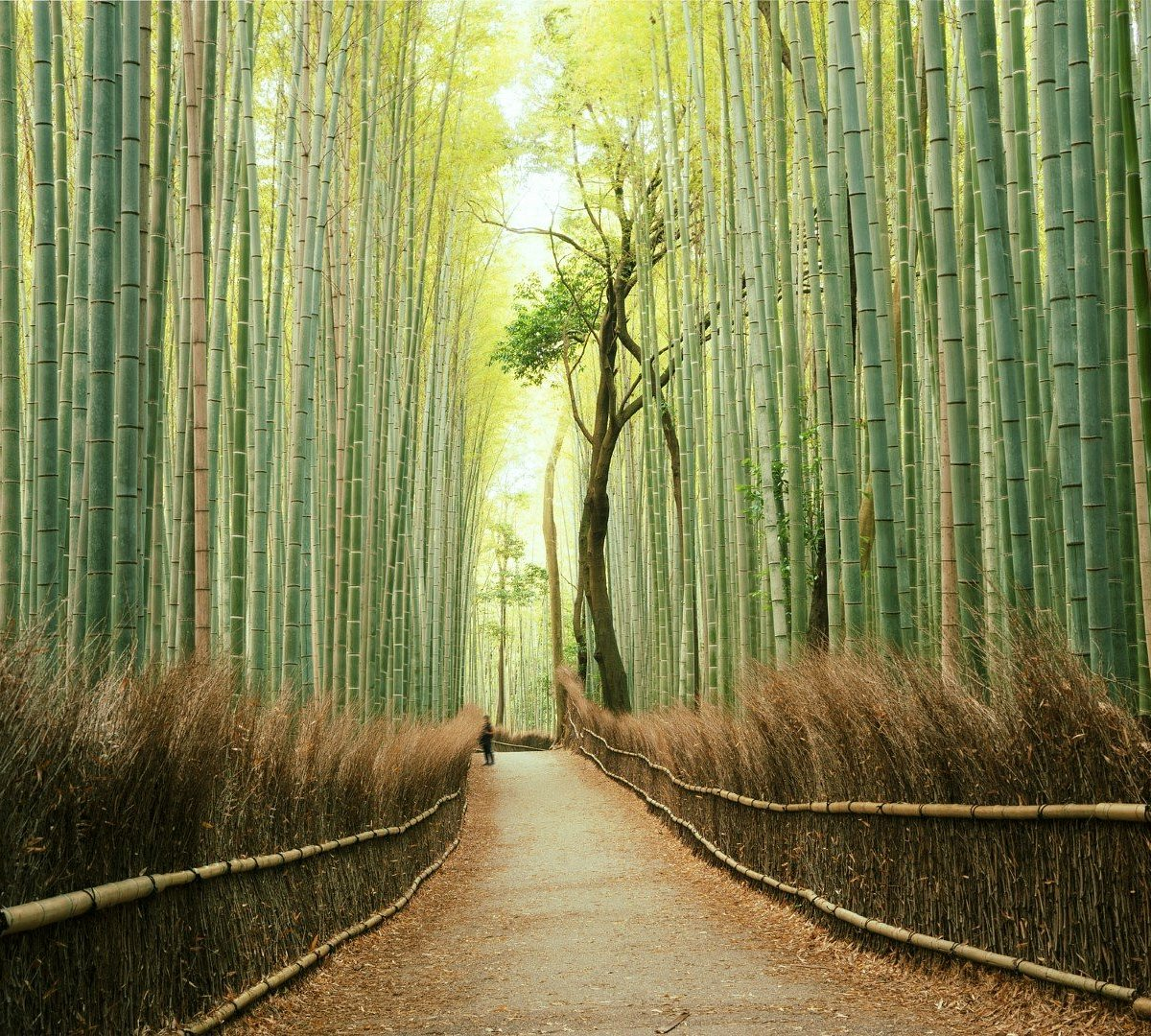
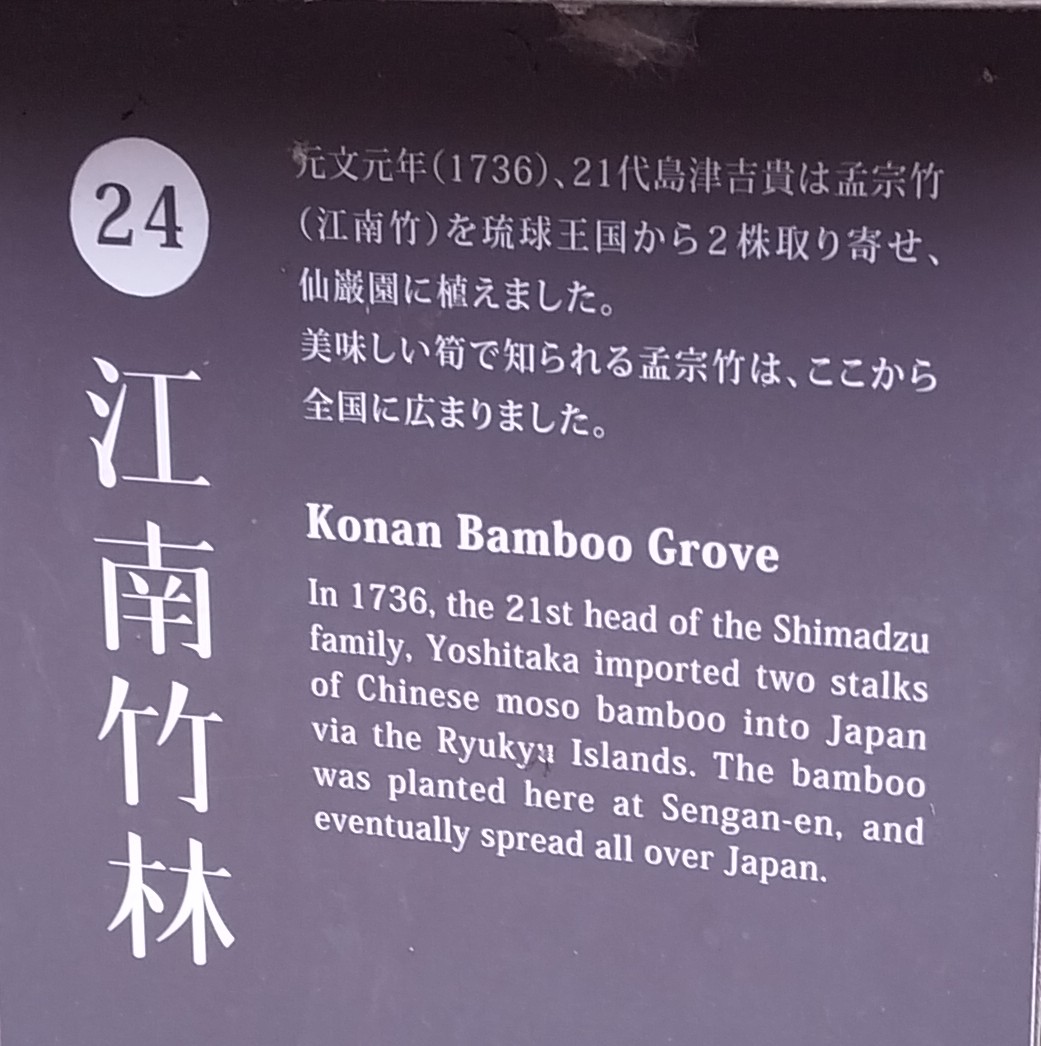
The Ryukyu influence doesn’t stop there however. In this center of Japanese Satsuma elite culture there are a number of nods to their connection to Okinawa. Many are through Chinese influences on architecture and gardens that came into Japan through Ryukyu, but it turns out agriculture is pretty important too. When people think about Japan, particularly in popular media, often bamboo groves like Arashiyama in Kyoto come to mind. However, the Japanese ecosystem wouldn’t even have moso bamboo without Ryukyu:
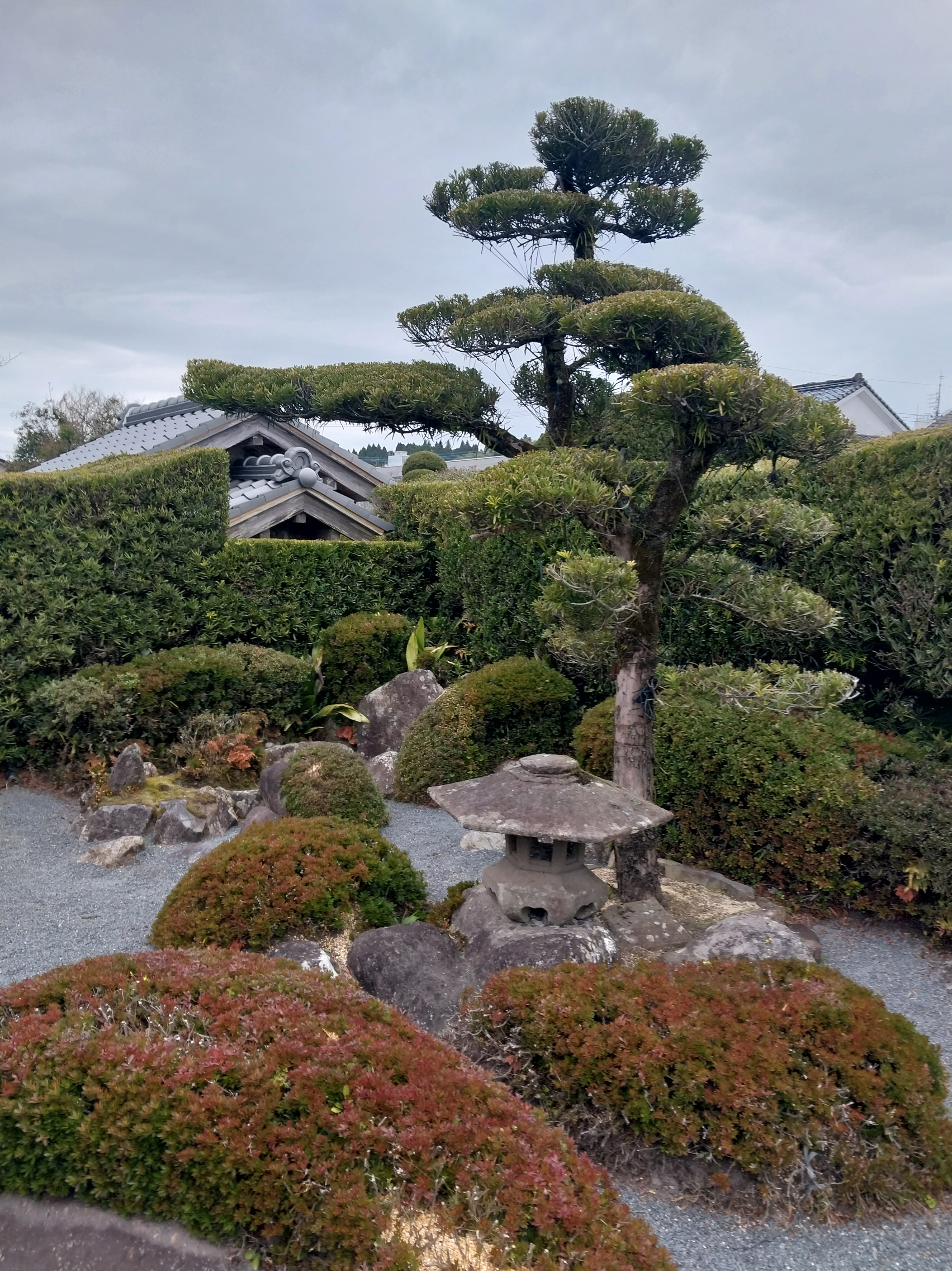
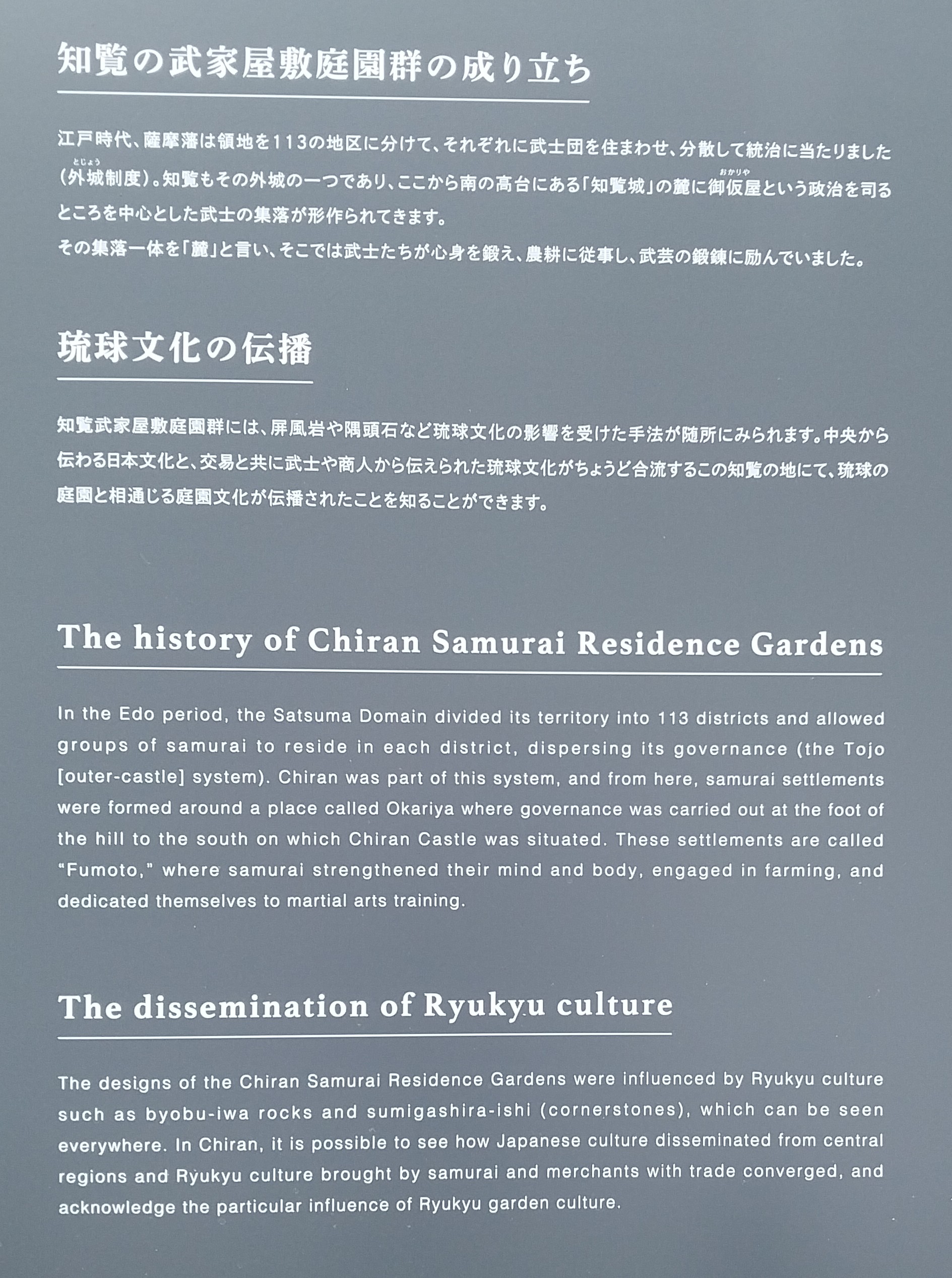
Continuing our trip through Kagoshima we spent an afternoon wandering through the samurai residences and gardens in Chiran. This was once, similarly to Sengan-en, a locus of elite samurai culture in the region. However this quintessentially Japanese approach to gardens was, it turns out, strongly influenced by Ryukyu culture:
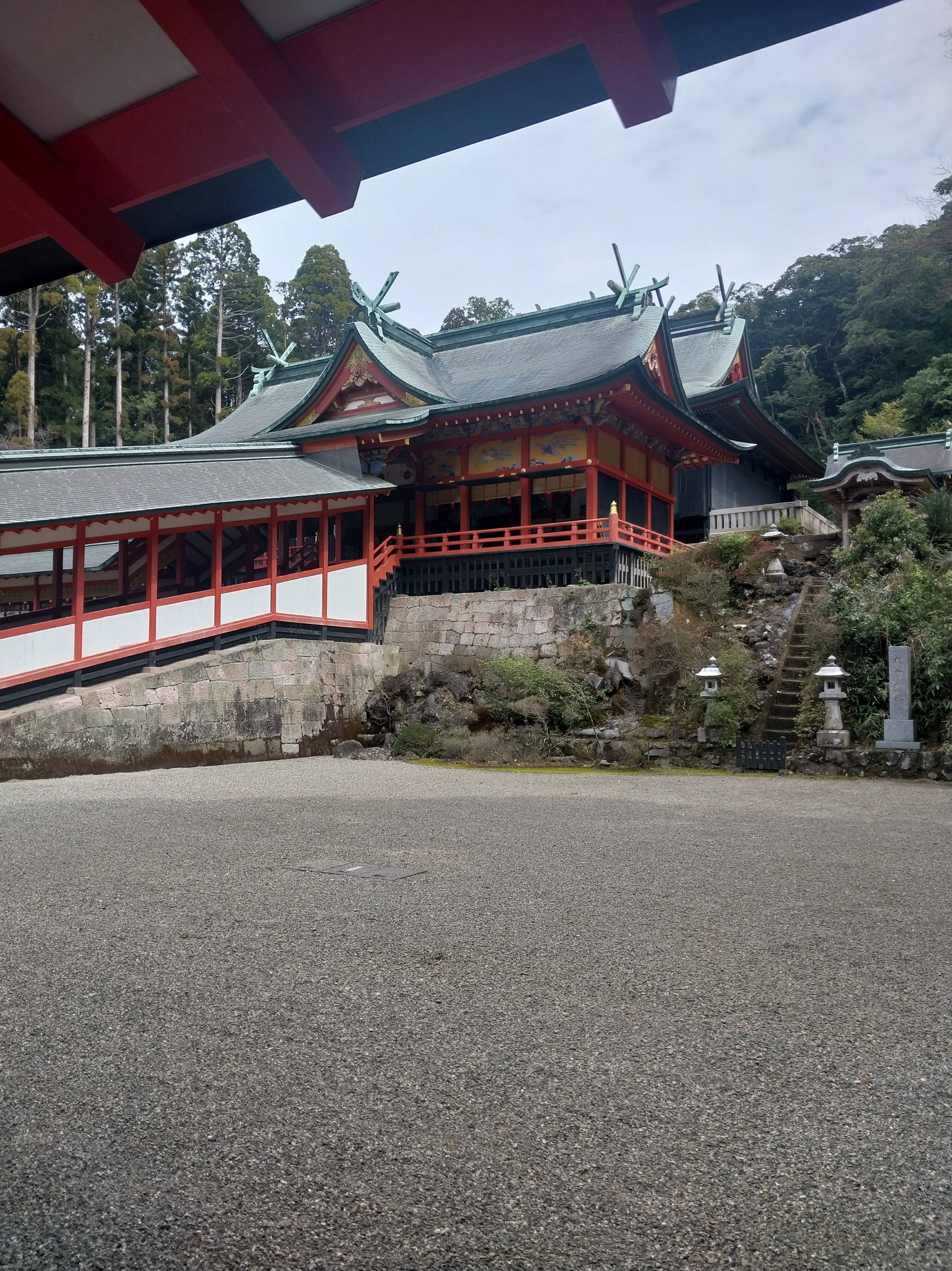
And finally: Kirishima shrine in the mountains in the north of Kagoshima prefecture, is a very important cultural and religious site. Founded in the sixth century it is dedicated to Ninigi no Mikoto, grandson of Amaterasu, who was sent down to earth at nearby Mt. Takachiho, bringing with him the Imperial regalia (the sword, mirror, and gem). He later became mortal, married a local princess, and founded the Japanese imperial line. In the honden, the central area of the shrine (built at its current location in 1715), there are the ryubashira, the dragon pillars. They are beautifully decorated pillars, their decoration strongly influenced by Ryukyu, and through Ryukyu, Chinese architecture and décor. Even in this shrine, central to Japan’s founding mythology, there is a clear influence from Ryukyu.
I am not saying that Ryukyu was somehow a wellspring from which Japanese culture sprang. That would be completely ahistorical, as well as absurd. However, even a cursory look at the culture of Satsuma, Japanese agriculture, and the history of Japanese political economy shows that while clearly a less powerful country, and later a subjugated vassal state, Ryukyu, Okinawa, asserted an influence on Japan that remains to this day. There are later influences, including food, popular music, dance, and so on that stretch through the Meiji period, through the 20th century, and continue, but this is enough for now.
Given these, I can’t help but wonder what influences Okinawa had on Japanese martial culture. The Japanese influences on Okinawan martial culture are many and while not as popularly understood as the Chinese, quite central to it. There is no documented evidence that I know of from before the 20th century of Okinawan martial culture’s influence on Japan. Of course in the 20th century the import of karate caused a huge change in Japanese martial, and popular, culture! But in the pre-Meiji period? In his Bubishi, The Bible of Karate, on p.51 researcher Patrick McCarthy quotes my original Jigen Ryu teacher, Togo Shigemasa. He said: “There can be no question that Jigen Ryu is connected to Okinawa’s domestic fighting traditions; however the question remains which influenced which!”
I personally doubt there was an Okinawan influence on Jigen Ryu. Of course it is possible, but given the power structures of the period of Jigen Ryu’s strongest presence in Okinawa, the clear and detailed documentation of Jigen Ryu’s founding and development, and as far as I know the complete lack of any record of such an influence, I find it highly unlikely that there was much of a two way street there. However, Okinawan influence did find its way into Japanese agriculture, architecture, religion, and popular culture. It is certainly possible there was an influence of some sort on its martial culture as well. Speculation aside however, what I find more important is this:
Power and influence are best understood within a more complex and complete approach to history. The narrative that is common to the Okinawan martial arts in the west often misses how embedded Okinawa was in the region, how militarily active it was, and how much influence it had, in certain ways. Missing this reinforces certain ideas about what the Okinawan martial arts are, ones that are at times unsound historically. These ideas can then feed specific narratives about the arts, ones that can benefit, or disenfranchise, specific stories or groups.
It is nice, and easy, to have a narrative for the art one is practicing having been developed by oppressed peasants to resist a cruel and domineering overlord. It plays into practically every hero story around the world. It is perhaps comforting to couch the training in violence that is part of any real martial art within a ready-built story that describes the art, and therefore the practitioner, as one of the good guys. If instead the story is more about wealthy members of society developing personal martial practices based in part on the arts of those oppressors, in part on those of their international trading partners, and in part from existing local arts, that is more complex. And giving the creators of these arts a kind of agency that demonstrates their ability to change, construct, and manipulate the practices they engage in, and to influence the cultures around them through this, well things get more complex still.
Again, I have no idea if Okinawan martial practices influenced mainland Japanese martial practices in the pre Meiji period the way their agriculture, architecture, and art did, and have seen no evidence for it the way there is evidence for the rest. But I have seen plenty of evidence that the Okinawans were, and are, active contributors to the region and the cultures of those around them. That they had a certain type of cultural capital that is often overlooked in the more common narrative around oppression, and around the absorption and adaptation of other cultures into their own. And that they are very active in promoting and developing their own culture.
This feels important to me as we look at the Okinawan martial arts today. The narrative of a small powerless country developing a simple effective martial art to help them fend off a more powerful aggressor feeds some stories and limits others. It, for example, feeds into the romantic descriptions of the Okinawan kobudo implements being farming and fishing tools repurposed by downtrodden peasants, while limiting the understanding of these kata being developed by members of the noble or gentry classes. It also feeds into a description of Okinawa and its martial arts that limits certain questions about power and agency. If they were developed to resist outside domination they have a moral as well as physical component. And if you believe these morals are important these arts can then be viewed as unchangeable, an embodiment of a specific history and worldview. If they are the product of experimentation and personal choice they are instead changeable in a different way.
Looking at the Okinawan martial arts in the 20th century this idea of a small powerless people reads differently. Starting with karate’s introduction into Japan in the early 20th century it has gained massive cultural power in Japan itself. In many ways it is the poster child for all martial arts, the one Japanese often think of first, even before their native born arts. Only Judo, and perhaps Kendo or Aikido, come in a close second. Perhaps because in the post war period it wasn’t repressed by the American occupational government the way classical Japanese arts were, giving it limited competition while it expanded into and adapted to the rapidly changing culture, this import has fundamentally changed the cultural landscape around budo in Japan. And then it has expanded to the rest of the world.
If you had to pick a single art to represent martial arts around the globe today you’d be hard pressed to pick a better candidate than karate. Sure Chinese kung’fu started the international recognition of the Asian martial arts, and these days MMA is definitely more popular, but no art is as omnipresent as karate. Like moso bamboo becoming ubiquitous in Japan, karate is all over the world, immediately recognizable (in all its variety) and so hegemonic that other arts, like kung’fu, often get called karate by both individuals and the popular press. No karate practitioner can claim to be training in a “secret” or “rare” art, given the huge number of people training in Okinawan karate. Even the most obscure and tiny Okinawan dojo usually sports an international member or two these days. There are far far more karateka outside Okinawa and Japan than within, and its media presence is huge and has been for decades. Karate has become an intrinsic part of modern global culture. But these stories of tiny secret arts and farmers wielding homemade weapons persist, along with the idea that Okinawa is essentially powerless on the global stage.
Over the last few decades groups on Okinawa, most notably the Okinawan government, have worked to reclaim Okinawa’s title to the birthplace, and locus of control, of karate. Looking at the narrative shift I’m talking about, from downtrodden resistance to global powerhouse, frames this reclamation in a different way. It represents a huge amount of cultural capital. It also represents huge amount of financial capital. And for both these reasons it seems important to me to keep a clear understanding of what the actual history of the art is. Who controlled it, how fluid and changing it was before the solidification of the modern styles in the post war period, and how it was influenced by a variety of sources.
That can help us understand who is pushing what narratives now, and what those narratives help them control. I’m not trying to put some nefarious face on the folks trying to promote Okinawan control of the art, or on the changes the art has gone through in recent decades. But it does seem worthwhile to look at who is being included and excluded by the larger groups, and, to me more importantly, through the stories that are being told. Whose systems are “real” with “pure lineages”, and whose are not. Which practices and ways of expressing the art are promoted, and which are not. What popularity means. And how that popularity is influenced by politics, money, and things like international competition standards, in the same way as pre-war karate, while creating massive changes in Japan, was influenced by Japanese ideas of lineage, system, rank, and so on.
Much as Okinawa had an influence on the culture that was dominating it in the pre-Meiji period, Okinawa currently has a huge influence on traditional martial practice world wide. Indeed, no other country’s art has such a global following. In some ways, this more subtle cultural influence is not a new thing. It is a long standing trope in Okinawan history, as evidenced by its historical influence on Japan. And understanding the power in that can only help us better understand both the arts and their place in our world, and our place in those arts.
As the influence of Okinawa is visible in what could be considered a central location of traditional Japanese culture, it is also now visible in communities around the world, often thought of as local as much as anything else. Instead of leaving that unexamined, perhaps we should work to understand what that influence means, how it has changed the cultures that it has influenced. This may then help us to better understand how those cultures have affected karate in the land of its roots, how that “champuru” effect is still changing karate. By doing so, we might get a better understanding of how we ourselves are situated in that larger environment; on what forces are acting on the art we practice, and therefore the way those of us that are deeply involved in this practice live our lives.

